Hiking: what it costs and who it fits
Walk a marked trail for a few hours and come back different
Prices checked August 6, 2026 / 3 sources linked / Oded Rochman
What it costs
| Item | Figure | What it covers |
|---|---|---|
| Starter gear | $40–$250 | One-off, everything you need for a first real attempt. |
| Running cost | $0–$30 a month | Materials and consumables at a steady weekly habit. |
| Time per session | 1 hr–5 hr | The normal working block, not the maximum. |
| Time to first win | One session | Until you make something you would show someone. |
Every figure here is dated and linked to a live listing under Sources. The same costs across every hobby we track are compared in what hobbies actually cost.
Hiking is the rare hobby where the first session is already the real thing: you drive to a trailhead, walk a marked loop, and come back tired in a way that feels earned. It fits people who want regular time outdoors without learning a skill first, and it works at almost any budget. The honest catch is that it is repetitive by design, and if you need novelty or a score to stay engaged, the fourth trail will feel a lot like the first.
What it actually costs
The cheap entry path is free and it is not a compromise. Sneakers you already own, a water bottle from the kitchen, and a maintained local loop under five miles cover it completely. Plenty of people hike this way for years without ever feeling under-equipped.
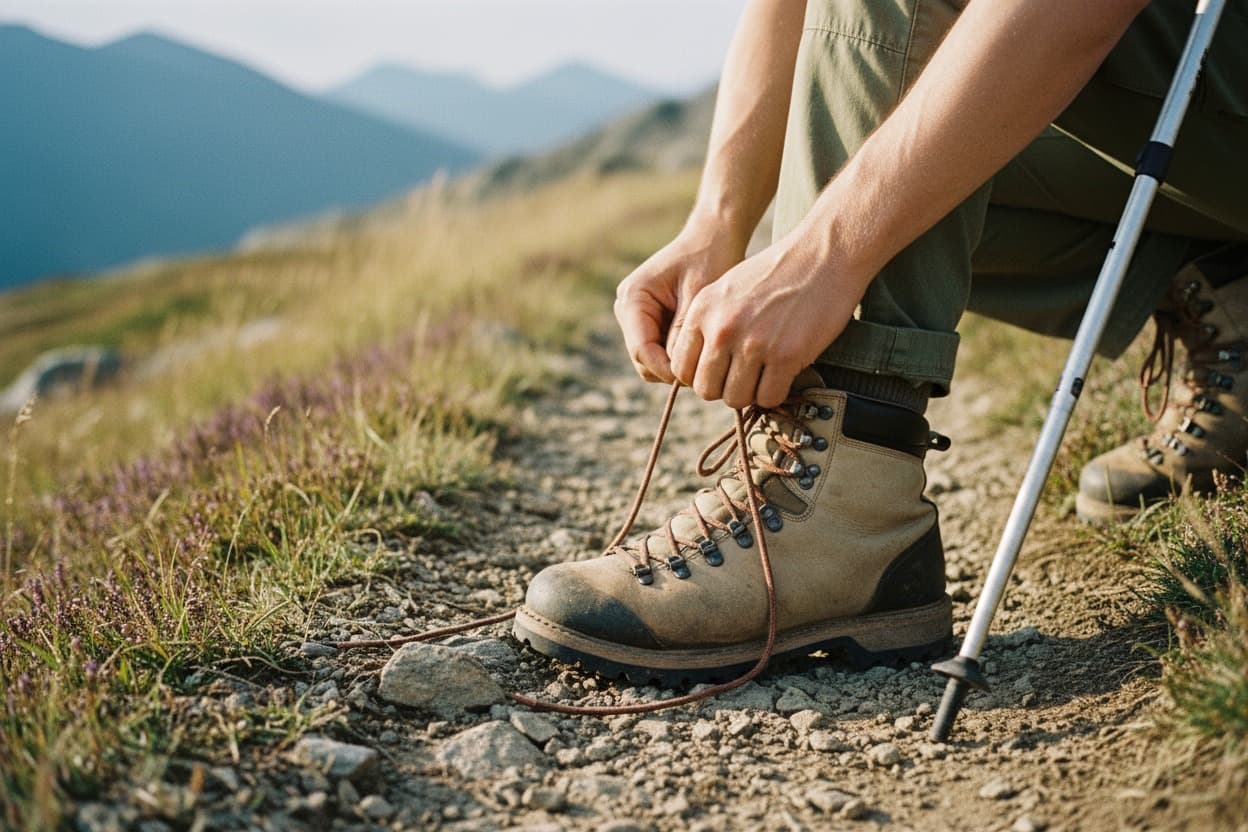
The real mid-path is three purchases, and only one of them is urgent. Shoes come first, because footwear is where a ruined day comes from. The Merrell Moab 3 waterproof runs $165 at REI and needs no break-in period, which is most of the reason it gets handed to beginners by default. A daypack is second: the Osprey Daylite Plus is $80 and carries water, a layer and lunch without turning a walk into an expedition. Third, if you hike on federal land, the America the Beautiful annual pass is $80 and covers entrance for one private vehicle for a year. Senior versions of the same pass are $20 annually or $80 for a lifetime.
Monthly cost after that is mostly fuel. Trails are free or close to it, nothing wears out quickly, and there is no upgrade treadmill unless you go looking for one. That is why hiking sits comfortably on the list of genuinely cheap hobbies rather than the ones that only look cheap in the first month.
What to buy first
Nothing. Sneakers you already own, a kitchen water bottle and a maintained local loop under five miles is a complete first month, and it is not a compromise version of hiking. Do that four or five times before spending anything, because what those walks tell you is which of the three purchases below you actually need, and for a lot of people the answer stays none.
Shoes are the first real spend and the only one that changes the experience. The Merrell Moab 3 at $165 is grippy from the box with no break-in, which matters because the classic beginner injury is blistering in new boots on a long day. The trigger is terrain rather than distance: wet rock, loose scree or mud, where sneaker tread stops holding.
The Daylite Plus at $80 waits until you are carrying enough that a shoulder bag annoys you, which is water, a layer and lunch. Below that a daypack is a thing to carry rather than a thing that carries.
The America the Beautiful pass at $80 is pure arithmetic, not gear. It covers entrance for one vehicle at federal sites, so it pays for itself in about three visits. Buy it the moment you have been twice.
Time to your first win
Same day. The first satisfying result is finishing a three to five mile loop, sitting down at the car, and noticing that the whole thing took two hours and cost nothing. There is no beginner phase to survive first, which puts hiking in a very small category of hobbies.
What takes longer is calibration. Most beginners pick a first hike that is too long, or too steep, or scheduled too late in the day, and the memory of that outing is what stops them going back. Give it six outings before you judge whether you like hiking, because the first two are usually you learning how far you can actually walk rather than you hiking.
The second win, and the one that decides whether this sticks, is the trail you return to on purpose. Somewhere around outing eight or ten most people find a loop they want to repeat in a different season, and that is when hiking stops being an activity and starts being a habit.
You'll enjoy this if
- You want time outdoors without first buying, learning or storing anything.
- Repetition suits you. The reward is the same walk in different light, not a new challenge each time.
- You want a hobby that scales to whatever energy you have on the day, from 45 minutes to eight hours.
- You like the idea of a shared activity where the talking is optional and the silence is not awkward.
- You need something that costs nothing on an ongoing basis, because subscription fatigue already got you.
Skip it if
- You have no reliable access to a car or transit that reaches a trailhead. This is the real barrier, not fitness.
- You need visible progress. There is no score, no rank, and no obvious way to be better at walking.
- Weather ruins your mood. Hiking is roughly half a weather hobby, and there is no indoor version of it.
- You want a social scene. Group hikes exist, but the default shape of this is solitary. Try pickleball if the point is meeting people.
- Heat, humidity or allergies are severe where you live for five months a year. Seasonal hobbies with a long off-season quietly die.
Your first month
- Pick a trail under four miles with a real parking lot and a marked loop. Loops beat out-and-backs for beginners because you cannot talk yourself into going further.
- Go in whatever shoes you own. Do not buy anything before your third hike, when you will know whether the shoes are actually the problem.
- Take twice the water you think you need and something salty. Most first-hike misery is dehydration, not distance.
- Repeat the same trail three times before finding a new one. Familiarity is what lets you notice pace, weather and how your body responds.
- Only then buy shoes, and buy them in a store where you can walk on an incline. Fit matters more than the model.
If you want a version of this with more to look at and less to walk, birdwatching uses the same trails at a quarter of the pace. If you want to stay out overnight, camping is the natural next step and the cost picture changes considerably.
Starter gear worth buying
Merrell Moab 3 Waterproof Hiking Shoes
$165
Grippy from the box with no break-in period, the default first pair
$80
Twenty liters carries water, a layer and lunch without feeling like gear
America the Beautiful annual pass
$80
Covers entrance at federal sites for one private vehicle, one year
Try it with a class
Backpacking / Hiking for Beginners
Udemy. Cheaper than a starter kit, and you find out in a weekend whether the craft suits you.
Gear and class links may earn us a commission. It never changes the price, or which gear we recommend.
Common questions
- Is hiking expensive to start?
- No. Hiking is close to the cheapest outdoor hobby available. You can start with sneakers you already own and a free local trail. If you want proper gear, the Merrell Moab 3 waterproof hiking shoe is $165 at REI and the Osprey Daylite Plus daypack is $80. An America the Beautiful annual pass, which covers entrance at federal sites, is $80. Ongoing cost after that is mostly fuel to reach trailheads.
- Is hiking a good hobby?
- It suits people who want regular time outdoors without learning a skill first. It scales from a 45-minute neighborhood loop to a full day, works alone or with company, and the barrier to a first session is a parking spot. It is a poor fit if you need measurable progress or novelty, because the activity itself changes very little between your first outing and your fiftieth.
- How long does hiking take to learn?
- There is nothing to learn before a first hike on a marked, maintained trail. The skills that matter, reading a trail map, judging how far you can actually go, and packing water for the conditions, settle in about six outings. Fitness is the slower variable. A five-mile hike with moderate climbing usually stops feeling hard somewhere between the fourth and eighth attempt.
- Is hiking a good hobby to start after 50?
- It is one of the more forgiving ones, because you control distance, elevation and pace completely and can build up from flat two-mile loops. Knees tend to be the limit rather than lungs, so shorter descents and trekking poles help more than fitness work does. The senior version of the America the Beautiful pass is $20 a year or $80 for a lifetime, which makes federal land the cheapest place to do it.
- Do I need hiking boots, or will sneakers work?
- Sneakers are fine for maintained dirt trails under about five miles in dry conditions, which covers most of a first year. Hiking shoes matter once the trail turns rocky, wet or steep, where grip and a stiffer sole prevent rolled ankles and bruised soles. The Merrell Moab 3 waterproof at $165 is the usual first pair because it needs no break-in period.
Sources
- REI Co-op, Merrell Moab 3 Waterproof Hiking Shoes, Men'sAugust 1, 2026
- REI Co-op, Osprey Daylite Plus PackAugust 1, 2026
- National Park Service, Entrance PassesAugust 1, 2026