Kayaking: what it costs and who it fits
Paddle a small boat on flat water; harder than it looks, calmer than expected
Prices checked August 6, 2026 / 4 sources linked / Oded Rochman
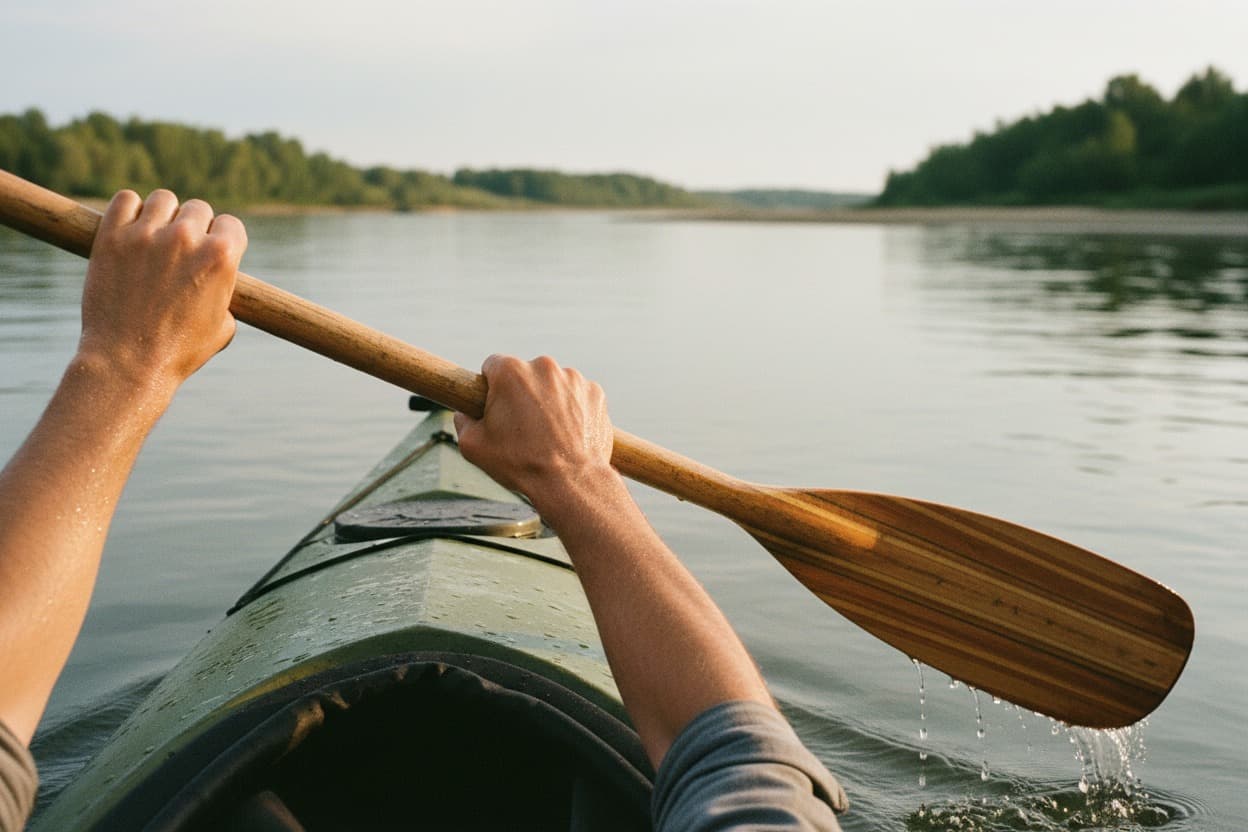
What it costs
| Item | Figure | What it covers |
|---|---|---|
| Starter gear | $80–$1,200 | One-off, everything you need for a first real attempt. |
| Running cost | $0–$60 a month | Materials and consumables at a steady weekly habit. |
| Time per session | 1 hr–4 hr | The normal working block, not the maximum. |
| Time to first win | One session | Until you make something you would show someone. |
Every figure here is dated and linked to a live listing under Sources. The same costs across every hobby we track are compared in what hobbies actually cost.
Kayaking is paddling a small boat on flat water, which is harder than it looks for the first twenty minutes and calmer than expected for the next two hours. It fits people who want a physical outdoor activity that is easy on joints and produces a specific kind of quiet that walking does not. The honest catch has nothing to do with skill or fitness: it is that a kayak is ten feet long, and where you put it when you are not using it decides whether you keep doing this.
What it actually costs
Renting first is not a compromise, it is the correct order of operations. Rates depend on who runs the launch. Texas state parks, as one published example, rent a kayak or canoe for $10 an hour, $25 for three hours, or $45 for six. Three rental outings cost about $75 and answer both questions that matter: whether you enjoy two straight hours of paddling, and whether the drive to water is short enough that you will actually go.
Owning starts higher than most people expect. The Old Town Breeze sit-on-top comes with a paddle for $449 at REI, which is the honest entry price for a boat you will not immediately want to replace. A personal flotation device is not optional and should not be the cheapest one available, because the cheap ones do not get worn: the NRS Vapor at $109.95 is thin enough at the shoulders that you forget it is on. A dry bag, the Exped Drybag Versa at $19.95, keeps your phone and keys usable. That is roughly $580 to be self-sufficient.
Ongoing cost after that is essentially zero, which is the argument for buying. There is no court fee, no consumable and no season pass. The costs that catch people out are transport and storage: roof racks, straps, and the garage space that a ten-foot hull permanently occupies.
What to buy first
A rental, and not as a compromise. Published rates run around $10 an hour at Texas state parks as one example, so three or four outings costs less than a life jacket and answers the questions that actually matter: whether you like being on the water, whether your shoulders tolerate it, and whether there is anywhere near you to launch. A $449 kayak is also a storage and transport problem, and that is what ends most kayak ownership rather than the paddling.
When you buy, the PFD at $109.95 is the purchase not to economise on, and the reason is specific: thin panels let you rotate your torso, and a bulky vest that restricts rotation is a vest people quietly stop wearing. A life jacket you do not wear is worse value than no life jacket.
The Old Town Breeze at $449 includes a paddle, which removes a decision beginners make badly, and it is light enough to carry alone. Test that claim against your own car and your own stairs before buying.
The dry bag at $19.95 is the cheapest item and the least optional. The boat gets water in it. Phones and keys are the things that make that expensive.
Time to your first win
The first hour. Getting a sit-on-top moving in a straight line on flat water is close to immediate, and the first win is being fifty meters from shore on water you have only ever looked at. There is no beginner phase to survive and no equipment to learn.
The second win is technique, and it arrives around session three or four. Beginners paddle with their arms and are tired in forty minutes. Rotating from the torso is the whole of the technique, and once it clicks a two-hour paddle stops being exercise and starts being transport. That switch is what makes people buy a boat.
Everything past flat water is a separate hobby with a real learning curve. Moving water, open water and anything with wind require rescue skills you cannot pick up by paddling more. A Level 1 course is the difference between a hobby you can grow into and one that stays confined to a single calm lake.
You'll enjoy this if
- You want physical outdoor activity that is genuinely low impact on knees and back.
- You have water within a short drive. Under 30 minutes and you will go weekly; over an hour and you will not.
- You like a repetitive rhythm. Paddling is closer to swimming laps than to a sport with events in it.
- You want an activity a couple can do side by side without either person waiting for the other.
- You have somewhere to store a boat that is not a hallway.
Skip it if
- You live in an apartment with no storage. Renting stays viable, but ownership will not happen and the hobby often fades with it.
- You cannot transport a ten-foot boat. This is the constraint people discover after buying, not before.
- You are not comfortable in water. Capsizing is uncommon on flat water but not rare, and a PFD is not a substitute for being calm.
- Your season is short. A three-month window with a $580 setup is a hard sell against hiking, which runs year round.
- You want intensity. Flat-water paddling is steady and undramatic by design.
Your first month
- Rent three times before buying anything at all. At $10 an hour this is the cheapest decision-making available.
- Go on a still morning. Wind is the variable that decides whether a first paddle is calm or exhausting, and mornings are usually calmer.
- Fix your technique early. Watch one demonstration of torso rotation and apply it on rental two, before bad habits set.
- Measure your storage and your car roof before you shop. The boat that fits your life beats the boat with better reviews.
- Take a Level 1 course before you paddle anything that moves. It is the one piece of instruction in this hobby that is not optional.
If the water was the appeal but the paddling is not, fishing puts you beside it for a fraction of the cost. If a kayak fits your weekends, camping pairs with it naturally and shares the same drives.
Starter gear worth buying
Old Town Breeze Sit-On-Top Kayak with Paddle
$449
Stable, light enough to carry alone, paddle included so nothing is missing
$109.95
Thin panels that let you rotate, which is why people actually wear it
$19.95
Keeps a phone, keys and a layer dry when the boat inevitably ships water
Try it with a class
Level 1 introduction to kayaking, taught by ACA-certified instructors
American Canoe Association. Found through a local provider; there is no national booking page. Cheaper than a starter kit, and you find out in a weekend whether the craft suits you.
Gear and class links may earn us a commission. It never changes the price, or which gear we recommend.
Common questions
- Is kayaking expensive to start?
- Renting is cheap and buying is not. Rental rates vary by state and operator: Texas state parks, for example, rent a kayak for $10 an hour, $25 for three hours or $45 for six. Owning starts around $560: an Old Town Breeze sit-on-top with a paddle is $449 at REI and an NRS Vapor PFD is $109.95. Ongoing cost is close to zero once you own the boat, which is why renting first is the correct financial move.
- Is kayaking a good hobby?
- It suits people who want a low-impact outdoor activity that is genuinely physical without being hard on joints. Flat-water paddling is calm, quiet and repeatable, and a session runs one to four hours. The real constraint is logistics rather than skill: you need somewhere to store a ten-foot boat and a way to move it to water.
- How long does kayaking take to learn?
- You will paddle competently on flat water within your first hour. Efficient technique, which uses your torso rather than your arms, takes a few sessions and is the difference between a pleasant two hours and sore shoulders. Rescue and recovery skills, which matter as soon as you leave sheltered water, need a proper course rather than practice.
- Should I rent or buy a kayak first?
- Rent, at least three times. State park rentals run about $10 an hour or $45 for six hours, so three outings cost less than a tenth of a boat. Renting also answers the two questions that decide ownership: whether you enjoy paddling for two hours straight, and whether you can realistically transport and store a boat at home.
- Is kayaking a good hobby for couples?
- It works well because it is parallel rather than competitive, and a tandem boat forces a shared rhythm that most couples find either very good or very informative. Costs roughly double if you buy two boats, so renting two at $10 an hour each is the sensible way to test it before committing several hundred dollars.
Sources
- REI Co-op, Old Town Breeze Sit-On-Top Kayak with PaddleAugust 1, 2026
- REI Co-op, NRS Vapor PFDAugust 1, 2026
- REI Co-op, Dry BagsAugust 1, 2026
- Texas Parks and Wildlife, Fort Parker State Park Kayak and Canoe RentalsAugust 1, 2026