Candle Making: what it costs and who it fits
Melt, scent and pour wax; a decent looking candle on day one
Prices checked August 6, 2026 / 3 sources linked / Oded Rochman
What it costs
| Item | Figure | What it covers |
|---|---|---|
| Starter gear | $50–$150 | One-off, everything you need for a first real attempt. |
| Running cost | $20–$80 a month | Materials and consumables at a steady weekly habit. |
| Time per session | 1 hr–2 hr | The normal working block, not the maximum. |
| Time to first win | 2 days | Until you make something you would show someone. |
Every figure here is dated and linked to a live listing under Sources. The same costs across every hobby we track are compared in what hobbies actually cost.
Candle making fits people who want a same-day result they can hand to someone. Melt, scent, pour, and you have six candles by the end of an evening. It works entirely at home on your schedule. The catch is that the candle you can see on day one is not the candle you can judge, because soy wax needs a week or two of cure before the scent behaves.
What it actually costs
The cost table on this page shows $50 to $150 to start, and both ends correspond to a real choice.
The cheap entry path is one kit. The CandleScience Astra Candle Making Kit is $45.99 and includes wax, wicks, jars and fragrance for six candles. Buying a kit for the first batch is genuinely the right call here, because kits arrive with the wick already matched to the wax and jar diameter, which is the exact variable beginners get wrong. Their Starter kit is $54.99 and the Starter+ is $74.99, both with more jar and wick variety.
The real mid-path is buying components, which is where the cost per candle drops sharply. A 10 lb bag of Golden Brands 464 soy wax is $31.97, or $3.96 for a single pound if you want to test first. A Fan Favorites Fragrance Flight of eight 1 oz sample bottles is $20.94, discounted from $27.92, and eight scents is far more useful early than one full-size bottle. That is $52.91 of wax and fragrance, enough for roughly twenty candles, before you add jars, wicks, a digital scale and a pouring pitcher.
Ongoing cost is wax and fragrance. The $20 to $80 monthly range in the table maps to roughly six to twenty-five candles depending on jar size and how much fragrance oil you use.
What to buy first
The Astra kit at $45.99, on its own. It makes six candles and includes everything, which matters more here than the price does: candle making has four variables that all interact, and a kit fixes three of them so your first pour teaches you one thing instead of failing for reasons you cannot separate.
The Starter kit at $54.99 is the same purchase with more jar and wick variety, and the $9 difference is not the question. Buy it only if you already know you want to test wick sizes, which is a thing you want after your first candle tunnels, not before.
Bulk wax is the classic overbuy. Golden Brands 464 at $31.97 for 10 lb is the correct wax and the wrong first purchase, because ten pounds is a lot of candles to make in a wax you have not yet decided you like working with. Buy it when the kit runs out and you are still pouring.
The fragrance flight at $20.94 is the smart version of a purchase most people get wrong. Eight 1 oz bottles cost less than committing to a full bottle of a scent that turns out to smell different burning than it does cold, which is the normal experience.
Time to your first win
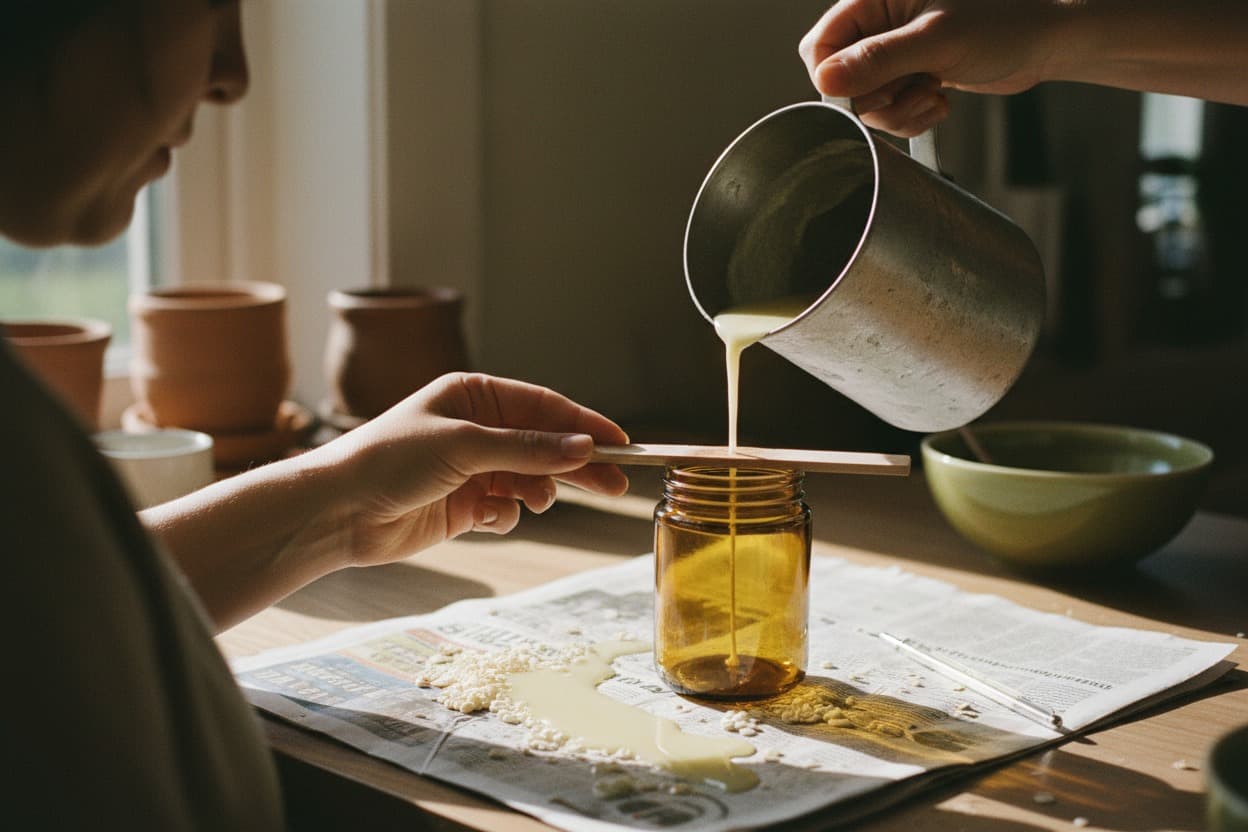
Two days, and the first pour is same-day. You melt wax, add fragrance at the right temperature, set the wick, pour, and let it set overnight. In the morning you have a candle that looks like a candle.
The delayed part is the one that matters. Soy wax continues crystallising after it sets, and fragrance needs time to bind into the wax. One to two weeks of cure is standard before you burn a test candle and find out whether the scent actually fills a room. That is the real feedback loop of this hobby, and it is slow.
Getting scent throw right takes several batches across one to two months, because it depends on wick size, wax type, fragrance load and jar diameter all matching. This is the part people underestimate. Pouring a pretty candle is easy. Pouring one that performs is a test-and-record process, and the people who get good at it keep a notebook.
You'll enjoy this if
- You want a finished, giftable product on the same evening you started.
- You like the idea of a hobby that is basically careful cooking with a thermometer.
- Testing and recording variables appeals to you rather than annoys you.
- You want something two people can do together at a kitchen counter.
- You would actually use or give away twenty candles a year.
Skip it if
- Cleanup irritates you. Wax on a counter, a spoon or a stovetop is a real chore.
- You want immediate feedback on quality. Cure time makes that impossible.
- Strong fragrance oils bother you or anyone in the house.
- You have no dedicated storage. Wax, jars, wicks and oils take up more shelf space than you expect.
- You want a hobby that builds a deep skill over years. This one plateaus fairly quickly.
Your first month
- Buy one kit at $45.99 for the first batch. Do not assemble components until you have poured once and know what the process feels like.
- Pour all six candles in one session. Batch pouring is where the time efficiency lives, and you learn more from six than from one.
- Wait the full two weeks before burning a test candle. Burning early teaches you nothing except that it was too early.
- Keep a one-line record per batch: wax, fragrance percentage, wick size, jar. This is the entire difference between improving and guessing.
- For batch two, buy a 10 lb bag of wax at $31.97 and a fragrance sampler at $20.94, and change exactly one variable.
If you want a craft with a longer skill ceiling, pottery and leathercraft both reward years rather than months. Candle making sits well on our list of hobbies to do at home precisely because it asks nothing of your space beyond a covered counter.
Starter gear worth buying
CandleScience Astra Candle Making Kit
$45.99
Six candles, everything included, cheapest honest first purchase
Golden Brands 464 soy wax, 10 lb
$31.97
The default container soy wax nearly every guide assumes
Fan Favorites Fragrance Flight, eight 1 oz bottles
$20.94
Test eight scents before committing to a full bottle
CandleScience Starter Candle Making Kit
$54.99
Step up from Astra with more jar and wick variety
Try it with a class
Candle Making: DIY Soy Wax Container Candles Scented with Essential Oils
Skillshare. Cheaper than a starter kit, and you find out in a weekend whether the craft suits you.
- Local craft studioCandle pouring workshop, two hours
Gear and class links may earn us a commission. It never changes the price, or which gear we recommend.
Common questions
- Is candle making expensive to start?
- No. A CandleScience Astra kit is $45.99 and makes six candles with wax, wicks, jars and fragrance included. Buying components separately is cheaper per candle: 10 lb of Golden Brands 464 soy wax is $31.97 and an eight-bottle fragrance sampler is $20.94. A kitchen scale and a pouring pitcher are the only extras.
- Is candle making a good hobby?
- It fits people who want a same-day result and a product they can give away. Sessions run 60 to 120 minutes and it works entirely at home on your own schedule. It is a poor fit if you dislike cleanup, because wax gets on everything and does not wipe off cold surfaces.
- How long does candle making take to learn?
- You can pour a decent-looking candle on day one and burn it two weeks later. Making a candle that actually throws scent across a room takes several test batches over one to two months, because that depends on matching wick size, wax, fragrance load and jar diameter to each other.
- Why do candles need to cure?
- Soy wax keeps crystallising after it sets, and the fragrance oil needs time to bind into it. Burning too early gives you a weak scent throw and a poor melt pool. One to two weeks of cure time is standard, which means candle making has a same-day visual win and a delayed real result.
- Can I make candles in a small apartment kitchen?
- Yes. You need a stovetop or a microwave, a heatproof pouring pitcher, a scale and a surface you can cover. There is no noise and no dust. The genuine constraint is mess: dedicate one pitcher and one spoon to wax permanently, because cleaning them for food use is not worth the effort.
Sources
- CandleScience, candle making kitsAugust 1, 2026
- CandleScience, Golden Brands 464 Soy WaxAugust 1, 2026
- CandleScience, Fan Favorites Fragrance FlightAugust 1, 2026