Pottery: what it costs and who it fits
Throw and hand-build clay vessels; kiln access is the real gate
Prices checked August 6, 2026 / 3 sources linked / Oded Rochman
What it costs
| Item | Figure | What it covers |
|---|---|---|
| Starter gear | $150–$700 | One-off, everything you need for a first real attempt. |
| Running cost | $60–$200 a month | Materials and consumables at a steady weekly habit. |
| Time per session | 1.5 hr–3 hr | The normal working block, not the maximum. |
| Time to first win | 3 days | Until you make something you would show someone. |
Every figure here is dated and linked to a live listing under Sources. The same costs across every hobby we track are compared in what hobbies actually cost.
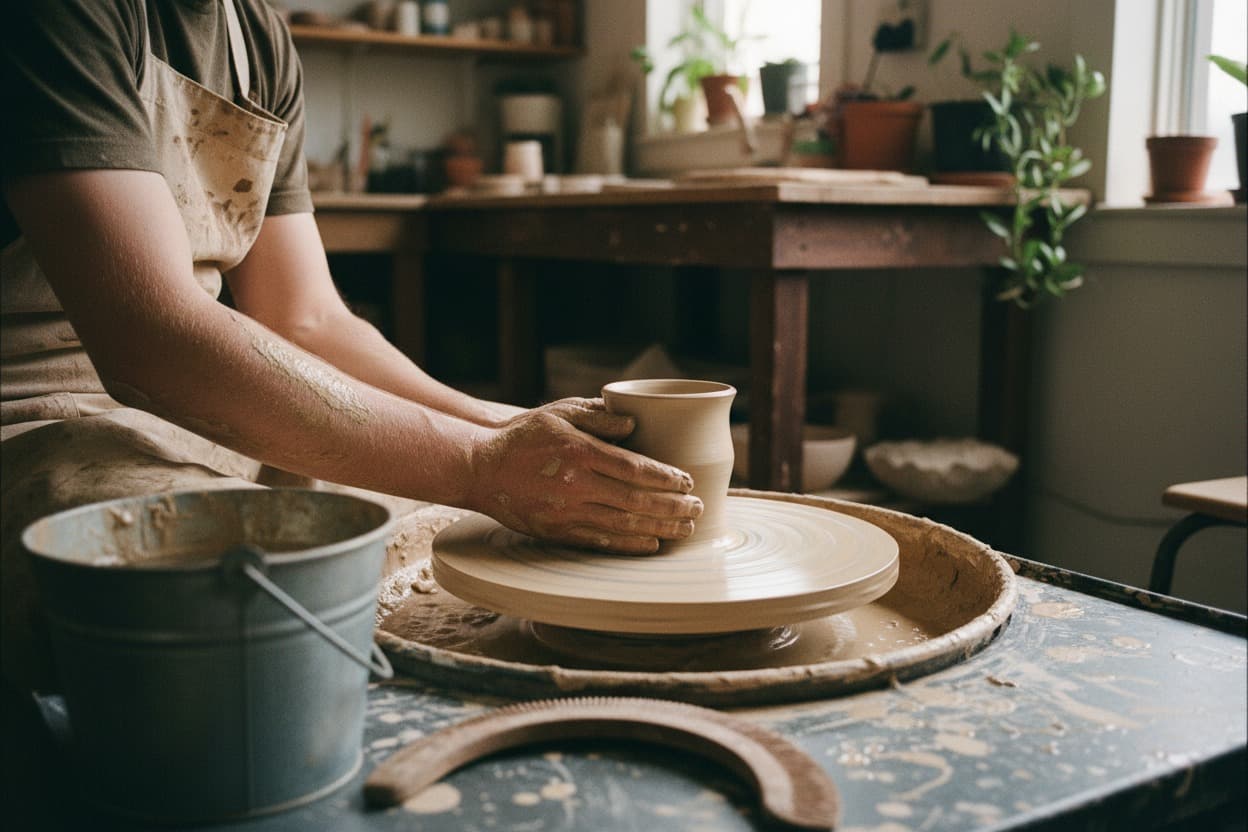
Pottery fits people who want a messy, physical, social craft and who are happy to leave the house to do it. The clay is cheap and the tools are cheap. The gate is the kiln, which almost nobody can put in a rental, so what you are really buying is studio access.
What it actually costs
The cost table on this page shows $150 to $700 to start, which looks wide until you see that it covers two different decisions: taking a class, or building a home setup.
The cheap entry path is a single drop-in session. At a working beginner studio these start around $39, include clay and firing, and answer the only question that matters, which is whether you like the feel of the material. Add a Kemper Pottery Tool Kit at $15.47 from Blick and you own everything a beginner personally needs.
The real path for most people is a multi-week course. A four-week beginner wheel class runs about $195 and a six-week version about $270 at a studio of that type, with clay, glazes and firing included. A four-week handbuilding intro is about $180 and needs no wheel at all, which is the cheaper and more forgiving door in.
The home setup is where the number jumps. A Speedball Artista tabletop wheel is $599.95 at Blick. That buys you throwing at home and nothing else. You still need somewhere to fire, which in practice means a studio membership, and those are typically sold monthly with shelf space and firing bundled. Monthly cost of $60 to $200 in the table is membership and clay, not tools.
What to buy first
A drop-in wheel session at $39.00. Pottery is unusually physical and unusually frustrating in the first hour, and one session tells you something no amount of reading does: whether centring clay makes you curious or furious. Both are common reactions and neither is predictable in advance.
Then the six-week course at $270.00, which is the real entry to this hobby rather than an accessory to it. Clay, glazes and firing are usually included in the price, and that bundling matters more than it looks: firing is the part a home potter cannot easily solve, and a course quietly hands you a kiln.
The Kemper 8-piece kit at $15.47 is worth owning early because it is cheap and studio tools are communal and inconsistent. Rib, needle, loop and wire cutter is everything a beginner touches.
The Speedball Artista at $599.95 carries the sharpest condition on this page: only once you have solved kiln access. A wheel without a kiln produces wet pots you cannot fire, which is the most expensive way to own mud. Solve firing first, then buy the wheel, not the other way round.
Time to your first win
Three sessions, so roughly three weeks. Most beginners pull something recognisable as a cylinder in their first or second class and keep a small bowl by the third.
The unusual thing about pottery is the delay between making and holding. A piece has to dry, get bisque fired, get glazed, then get glaze fired. Three to five weeks between the session where you made it and the day you take it home is normal. Nobody warns beginners about this and it is the most common source of early disappointment.
Centering, the skill everything else depends on, takes most people six to twelve weeks. It is a strength and posture problem more than a hand-skill problem, and it is genuinely tiring at first.
You'll enjoy this if
- You want a craft that gets you out of the house and around other people weekly.
- You like physical work and do not mind being tired and dirty afterwards.
- You can commit to a fixed weekly time slot. Studio classes do not reschedule around you.
- You want beginner output you would actually use, which pottery gives earlier than most crafts.
- Mess does not bother you. Clay dust gets everywhere and settles on everything.
Skip it if
- You need a hobby you can do at home in unpredictable 30-minute gaps.
- There is no studio within a reasonable drive. Without kiln access this stops at wet clay.
- You want to keep monthly spending near zero. Membership and firing are ongoing.
- You want instant feedback. Weeks pass between making and seeing the finished glaze.
- You have wrist, shoulder or back issues that make sustained forward pressure painful.
Your first month
- Book one drop-in wheel session before anything else, around $39. If you dislike the feel of wet clay, you have learned that for the price of a dinner.
- If the session lands, sign up for a four-week beginner course rather than buying equipment. The course includes the kiln, which is the expensive part.
- Buy the $15.47 tool kit and nothing else. Studios supply clay, glazes, wheels and boards.
- Try one handbuilding class alongside the wheel. Plenty of people who dislike the wheel love coil and slab work, and it needs no equipment at all.
- Only consider a home wheel after two full courses, and only once you have a firing arrangement in writing.
If the studio commitment is the problem rather than the craft, candle making gives you a similar making-with-your-hands result on your own schedule at home. For a quieter, cheaper hands-on option, look at watercolor painting, and for more things to do with a partner see hobbies for couples.
Starter gear worth buying
Kemper Pottery Tool Kit, 8 piece
$15.47
Rib, needle, loop, wire cutter; everything a beginner touches
$39.00
Try it once before committing to a multi-week course
Six-week beginner wheel course
$270.00
Clay, glazes and firing usually included in the price
Speedball Artista tabletop wheel
$599.95
Only worth it once you have solved kiln access
Try it with a class
Ceramics at Home for Beginners
Domestika. Cheaper than a starter kit, and you find out in a weekend whether the craft suits you.
- Local ceramics studioBeginner wheel throwing, four to six weeks
- Local ceramics studioIntro to handbuilding, no wheel required
Gear and class links may earn us a commission. It never changes the price, or which gear we recommend.
Common questions
- Is pottery expensive to start?
- It is one of the pricier crafts, and the money goes to access rather than tools. A beginner tool kit is $15.47 at Blick. A six-week beginner wheel course at a working studio runs about $270, and a single drop-in wheel session starts around $39. A home wheel is $599.95 for a Speedball Artista, and it still does not fire your work.
- Is pottery a good hobby?
- It is excellent if you want a social, hands-on craft with a physical result, and poor if you want to work quietly at home on your own schedule. Sessions run 90 to 180 minutes because clay does not resume well, and most people depend on a studio for wedging space, glazes and firing.
- How long does pottery take to learn?
- You will make something on a wheel in your third session, roughly three weeks in. Centering clay reliably takes most people six to twelve weeks. Add three to five weeks after each session before you hold the finished piece, because drying, bisque firing and glaze firing all take time.
- Why do I need a studio if I buy my own wheel?
- Because of the kiln. A kiln is expensive, needs dedicated electrical service and ventilation, and most rentals and apartments cannot host one. Studios sell shelf space and firing as a membership, which is why the monthly cost of pottery stays real even after you own equipment.
- Is pottery good for couples?
- Yes, unusually so. Wheel work is side by side rather than face to face, single sessions are widely sold as drop-ins from about $39 per person, and you both leave with an object. It is one of the few crafts where beginner-level output is still worth keeping.
Sources
- POT (Los Angeles), beginner pottery class pricesAugust 1, 2026
- Blick Art Materials, Kemper Pottery Tool KitAugust 1, 2026
- Blick Art Materials, Speedball Artista Potter's WheelAugust 1, 2026