Leathercraft: what it costs and who it fits
Cut, stitch and tool real leather into wallets, belts and bags
Prices checked August 6, 2026 / 4 sources linked / Oded Rochman
What it costs
| Item | Figure | What it covers |
|---|---|---|
| Starter gear | $60–$180 | One-off, everything you need for a first real attempt. |
| Running cost | $15–$60 a month | Materials and consumables at a steady weekly habit. |
| Time per session | 45 min–2 hr | The normal working block, not the maximum. |
| Time to first win | 2 days | Until you make something you would show someone. |
Every figure here is dated and linked to a live listing under Sources. The same costs across every hobby we track are compared in what hobbies actually cost.
Leathercraft suits people who want to finish an object rather than reach a level. A card holder takes one evening, the third one is genuinely giftable, and nothing dries or spoils if you walk away mid-project. The catch is noise: punching stitch holes means a mallet, in short repeated bursts, which is a real problem if you share a wall.
What it actually costs
The cost table on this page puts the start at $60 to $180, and both ends of that are real entry points rather than a flattering spread.
The cheap path is one piece of leather plus the two tools that matter. Tandy's Economy Dyed Veg-Tan Belly is $24.99 and yields several small goods. A Diamond Stitching Chisel Set from Weaver Leather Supply is $26.50 and is the single tool that decides whether your stitch line looks intentional. Those two purchases are $51.49 together, and adding a mallet, waxed thread and two needles still leaves you well under the price of a branded box.
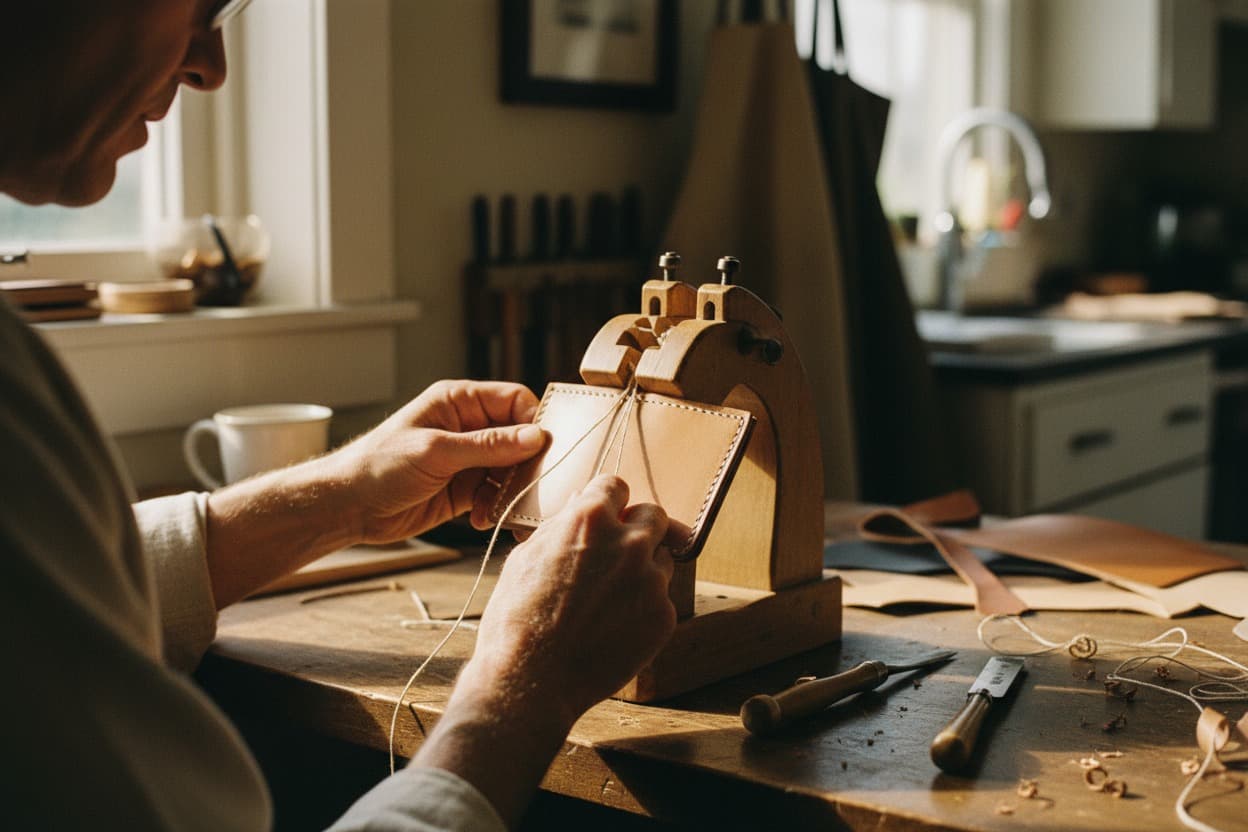
The real mid-path is one boxed kit, which is what most people should do. Weaver's Beginner's Leathercrafting Tool Kit is $95 and includes a stitching pony, chisel set, stitch groover, awl, art knife, thread and needles. That is close to the full list of tools you will actually reach for in the first year. Tandy's cheapest boxed option, the Hand Stitching Starter Set, is $169.99, and the Workshop Starter Set is $499.99. Neither is a beginner purchase.
After that, cost is leather. A Tandy Economy Veg-Tan Double Shoulder is $69.99 and will carry a project every two weeks for close to a year. Consumables like thread, dye and edge paint are small by comparison, and the $15 to $60 monthly range in the table covers both at that pace.
What to buy first
The Weaver beginner kit at $95.00 and a Tandy economy belly at $24.99. About $120, and it makes finished giftable objects rather than practice scraps. Buy the kit whole rather than assembling tools: cheap leather tools fail in ways that look like a lack of skill, because a blunt punch tears where a sharp one cuts, and the beginner blames themselves.
The belly is the right first hide precisely because it is not precious. It has irregular thickness and loose edges, you will cut it wrong, and it costs a quarter of what a shoulder does while you learn to read a hide before committing a pattern to it.
The diamond stitching chisel set at $26.50 is the upgrade that most visibly changes your work, and its trigger is precise: your stitch lines are evenly spaced but the stitches sit at inconsistent angles. Chisels fix the angle. Bought on day one, it just means learning two things at once.
The double shoulder at $69.99 is a year of wallets in one hide and much better value per square foot, and it only pays off once you cut accurately enough not to waste it. Three finished projects is the honest threshold.
Time to your first win
Two days, and realistically one evening. A card holder is four tools and about two hours: cut two panels, mark a stitch line, punch it, saddle stitch, burnish the edges. It works, it goes in your pocket, and it teaches every core skill in miniature.
The honest part is what happens next. Your stitch line will be uneven for the first several projects, and no amount of care fixes that early. What fixes it is repetition, somewhere between six and ten finished pieces. People who quit leathercraft almost always quit in that window, having decided the ugly stitching means they lack talent. It means they have made six things instead of sixty.
You'll enjoy this if
- You want a physical object at the end, and you want to hand it to someone.
- Your free time arrives in unpredictable one to two hour blocks. Leather waits indefinitely.
- You find slow repetitive handwork calming rather than tedious.
- You already like tools and do not mind maintaining a knife edge.
- You want a craft that can eventually pay for itself through commissions.
Skip it if
- You need visible progress inside the first hour. This craft withholds that for weeks.
- You have no surface you can cut into and mark up permanently.
- Mallet noise is a problem where you live and daylight hours are not available to you.
- You want to save money on wallets. A $95 kit plus $24.99 of leather does not beat retail.
- You dislike work where one bad cut wastes material you already paid for.
Your first month
- Buy one boxed beginner kit rather than individual tools. You do not yet know which tools you will reach for, and buying piecemeal costs more.
- Make a card holder first, not a wallet. Two hours, four tools, and it contains every skill a wallet needs at a quarter of the material cost.
- Watch one full saddle-stitch demonstration before threading a needle. The stitch is most of the craft and the common beginner error is direction, not tension.
- Make the same card holder three more times before changing patterns. Repetition on a known object is what improves the stitch line.
- Only after four finished pieces should you buy leather in quantity or add tools. Then a double shoulder makes sense.
If the mallet is the blocker, woodworking is louder still, and the quieter needle crafts like embroidery give you the same seated handwork with none of the noise. For more options that stay inside your apartment, see hobbies to do at home.
Starter gear worth buying
Weaver Beginner's Leathercrafting Tool Kit
$95.00
One box covers cutting, punching and stitching properly
Weaver Diamond Stitching Chisel Set
$26.50
The upgrade that most changes how a stitch line looks
Tandy Economy Dyed Veg-Tan Belly
$24.99
Cheapest honest leather for small goods and practice cuts
Tandy Economy Veg-Tan Double Shoulder
$69.99
A year of wallets in one hide; buy after three finished projects
Try it with a class
Leathercraft Basics: Create Your Own Leather Wallet
Skillshare. Cheaper than a starter kit, and you find out in a weekend whether the craft suits you.
Gear and class links may earn us a commission. It never changes the price, or which gear we recommend.
Common questions
- Is leathercraft expensive to start?
- No, if you buy once. A boxed beginner tool kit from Weaver Leather Supply is $95 and covers cutting, stitching and finishing. Leather is the recurring cost: an economy dyed veg-tan belly from Tandy is $24.99 and a full double shoulder is $69.99. Skip the $499.99 workshop sets. They exist for people already selling their work.
- Is leathercraft a good hobby?
- It fits people who want a finished object rather than a score. Sessions are 45 to 120 minutes, fully pausable, and nothing dries or spoils while you are away. It is a poor fit if you want fast visible progress, because the saddle stitch looks wrong for the first several projects no matter how carefully you work.
- How long does leathercraft take to learn?
- A working card holder takes one evening, roughly two hours. Stitching that looks deliberate rather than accidental takes two to three months of projects. The skill curve is unusually flat: the saddle stitch is the whole craft, and improvement comes from repetition, not from learning new techniques.
- Can I do leathercraft in an apartment?
- Mostly yes. Cutting, stitching and edge finishing are silent and seated at a table. Punching stitch holes needs a mallet against a poly board, which is short bursts of real thumping. Keep hole punching to daylight hours if you share a wall, and do the stitching at night.
- Does leathercraft save money on wallets?
- No. A $95 tool kit plus $24.99 of leather is more than a decent factory wallet costs, and your first three will be worse. The economics only work if you keep going, gift the output, or eventually sell. Take it up because you want to make things, not to beat retail.
Sources
- Weaver Leather Supply, Beginner's Leathercrafting Tool KitAugust 1, 2026
- Weaver Leather Supply, Diamond Stitching Chisel SetAugust 1, 2026
- Tandy Leather, starter setsAugust 1, 2026
- Tandy Leather, veg-tan leatherAugust 1, 2026