Woodworking: what it costs and who it fits
Build furniture and boxes from raw lumber with saws, chisels and glue
Prices checked August 6, 2026 / 4 sources linked / Oded Rochman
What it costs
| Item | Figure | What it covers |
|---|---|---|
| Starter gear | $105–$1,500 | One-off, everything you need for a first real attempt. |
| Running cost | $30–$150 a month | Materials and consumables at a steady weekly habit. |
| Time per session | 1.5 hr–4 hr | The normal working block, not the maximum. |
| Time to first win | 3 days | Until you make something you would show someone. |
Every figure here is dated and linked to a live listing under Sources. The same costs across every hobby we track are compared in what hobbies actually cost.
Woodworking fits people with a garage, a basement or a tolerant set of neighbours, and with free time that arrives in long blocks. It produces furniture you will keep for decades and it teaches a genuinely deep skill. The catch is that it is the loudest, dustiest, most space-hungry craft on this site, and no amount of enthusiasm solves an apartment.
What it actually costs
The cost table on this page runs from $105 to $1,500 to start, and the two ends are two different hobbies. The $105 floor is the hand-tool route. The $300 to $1,500 stretch above it is the power-tool route, and most beginners should take the cheap one.
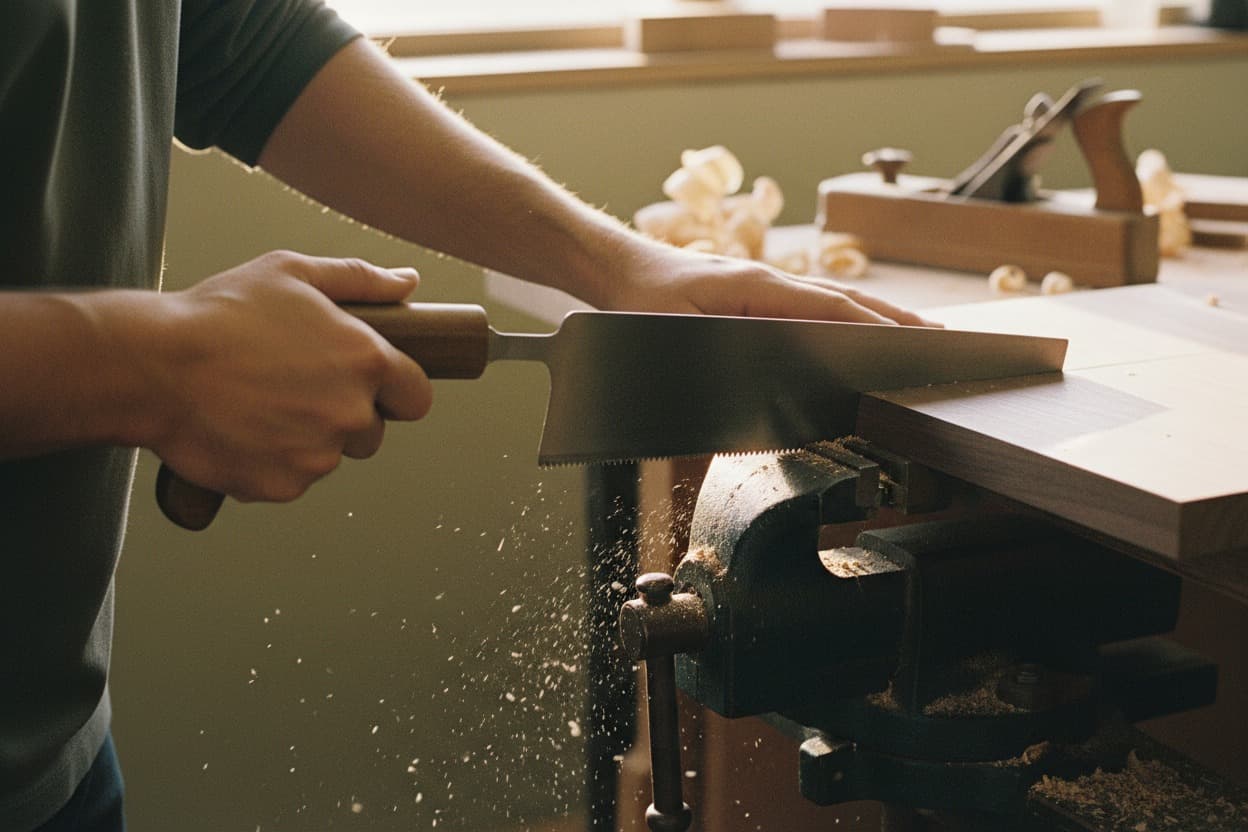
The cheap entry path is three purchases. A Z-Saw S-250 double-edge ryoba at Rockler is $24.99 and does both rip and crosscut. A four-piece Narex Premium Bevel Edge Chisel Set is $48.74. One Builders Choice 1x6x8 S4S poplar board from Home Depot is $31.15 and is already milled flat, which removes the hardest beginner step. Those three purchases total $104.88, and that is enough to build a real box.
The real mid-path adds sharpening and workholding. A Rockler diamond sharpening stone is $44.99, and for workholding you can start with clamps against a sturdy table rather than a bench. Dull tools are the single most common reason beginners conclude they are bad at this, and sharpening is a skill you must buy into early.
Power tools are where the table's upper end comes from. A table saw, a planer, dust collection and a bench push a shop past $1,500 quickly, and none of it is required to build furniture. Ongoing cost is lumber. At $31.15 per poplar board, a monthly range of $30 to $150 is one to four boards depending on how ambitious you get.
What to buy first
The ryoba pull saw at $24.99, the Narex chisels at $48.74, a poplar board at $31.15 and the diamond stone at $44.99. About $150, and it is the hand-tool route rather than a stripped-back version of the machine route. Those are two different hobbies and choosing between them is the actual first decision.
Buy the sharpening stone in week one, not later. Dull chisels are why beginners quit: a sharp chisel pares end grain cleanly and a dull one crushes and tears, and the beginner reads that as their own incompetence. It is the least exciting $44.99 on this page and the one that most changes whether you continue.
Poplar is the right first wood precisely because it is cheap to ruin. It is milled flat already, so you are not fighting a rough board with tools you cannot yet use, and it forgives a cut that wanders.
The ryoba does rip and crosscut in one blade and cuts on the pull stroke, which is easier to control. It removes the first tool decision entirely, and a beginner should have fewer decisions rather than more.
Time to your first win
A weekend, roughly three days. A small box or a wall shelf takes about that from raw board to oil finish, and it is a real object you will keep.
The honest part is joinery. A dovetail or mortise that closes with no gaps takes most people three to six months of regular practice, and the first dozen attempts have visible gaps you will feel embarrassed by. Everyone's do. Fill them, finish the piece, and cut the next one.
The second honest part is setup time. A woodworking session has fixed overhead: clear the space, set up the work, sharpen, then clean up sawdust. That overhead is why sessions run 90 to 240 minutes rather than 30. If you cannot regularly find a three-hour block, this hobby will frustrate you.
You'll enjoy this if
- You have a garage, basement, shed or workshop you can leave a project set up in.
- Your free time comes in blocks of three hours or more, not 20-minute gaps.
- You want to make furniture you will still own in twenty years.
- You like tuning and maintaining tools as much as using them.
- Noise and sawdust in your space are genuinely not a problem for anyone.
Skip it if
- You live in an apartment with shared walls. Even hand-tool work is audible.
- You have nowhere to store lumber, tools and a half-finished project between sessions.
- You want quick results. Nothing here is finished in an hour.
- You dislike measuring, or you want a craft where mistakes are cheap to undo. Wood does not undo.
- Fine dust is a health concern for you or anyone in the house.
Your first month
- Buy the saw, the chisel set and one poplar board, $104.88 together. Resist buying anything else until you have cut that board.
- Learn to sharpen in week one. Watch one method, buy one plate, and get all four chisels genuinely sharp before starting a project.
- Build a small box with rabbet joints, not dovetails. It teaches accurate sawing and a square cut without the failure rate.
- Cut ten practice joints in offcuts before putting a joint in a real project. Cheap repetition on scrap is how the skill actually arrives.
- Only buy a power tool when a specific project makes a specific machine necessary. Not before.
If the space or the noise rules this out, leathercraft gives you similar tool-based making at a kitchen table, and pottery moves the mess out of your home entirely. For more options that stay in the house, see hobbies to do at home.
Starter gear worth buying
Z-Saw S-250 double-edge ryoba pull saw
$24.99
Rip and crosscut in one blade; cuts on the pull stroke
4-Piece Narex Premium Bevel Edge Chisel Set
$48.74
Four sizes covers every joint a beginner will cut
Builders Choice 1x6x8 S4S poplar board
$31.15
Milled flat already, forgiving to cut, cheap to ruin
Rockler diamond sharpening stone
$44.99
Dull chisels are why beginners quit; buy this in week one
Try it with a class
Woodworking For Beginners: Source, Design, and Sculpt With Confidence
Skillshare. Cheaper than a starter kit, and you find out in a weekend whether the craft suits you.
- Local makerspaceShop safety and machine orientation
Gear and class links may earn us a commission. It never changes the price, or which gear we recommend.
Common questions
- Is woodworking expensive to start?
- Hand tools make it cheaper than people expect. A Z-Saw ryoba pull saw is $24.99 and a four-piece Narex bevel edge chisel set is $48.74, both at Rockler. Add one poplar board at $31.15 from Home Depot and you have everything needed for a first box. A sharpening stone at $44.99 is the only other purchase that matters early.
- Is woodworking a good hobby?
- It fits people with dedicated space, tolerant neighbours and long uninterrupted blocks of time. Sessions run 90 to 240 minutes because setup and cleanup are fixed costs on every session. It is a poor fit for apartments, shared walls, and evenings that get interrupted every 20 minutes.
- How long does woodworking take to learn?
- A small box or shelf takes a weekend, about three days from raw board to finish. Cutting a joint that closes cleanly without gaps takes most people three to six months of regular practice. Sharpening is a separate skill that most beginners underestimate and that gates everything else.
- Can I do woodworking in an apartment?
- Only hand-tool work, and only with real constraints. Sawing and chiseling are moderate noise, not silent, and planing generates shavings rather than airborne dust. Power tools are effectively out. Many apartment woodworkers use a portable bench on a balcony or in a garage rather than indoors.
- Should I start with hand tools or power tools?
- Hand tools, for the first three months. They cost less, need no dust collection, teach you what a cut should feel like, and cannot injure you at speed. Buy power tools when a specific project makes a specific machine necessary, not as a starting kit.
Sources
- Rockler, 4-Piece Narex Premium Bevel Edge Chisel SetAugust 1, 2026
- Rockler, Z-Saw S-250 Double-Edge Ryoba SawAugust 1, 2026
- The Home Depot, Builders Choice 1 in. x 6 in. x 8 ft. S4S Poplar BoardAugust 1, 2026
- Rockler, Diamond Sharpening StonesAugust 1, 2026