Vinyl Records: what it costs and who it fits
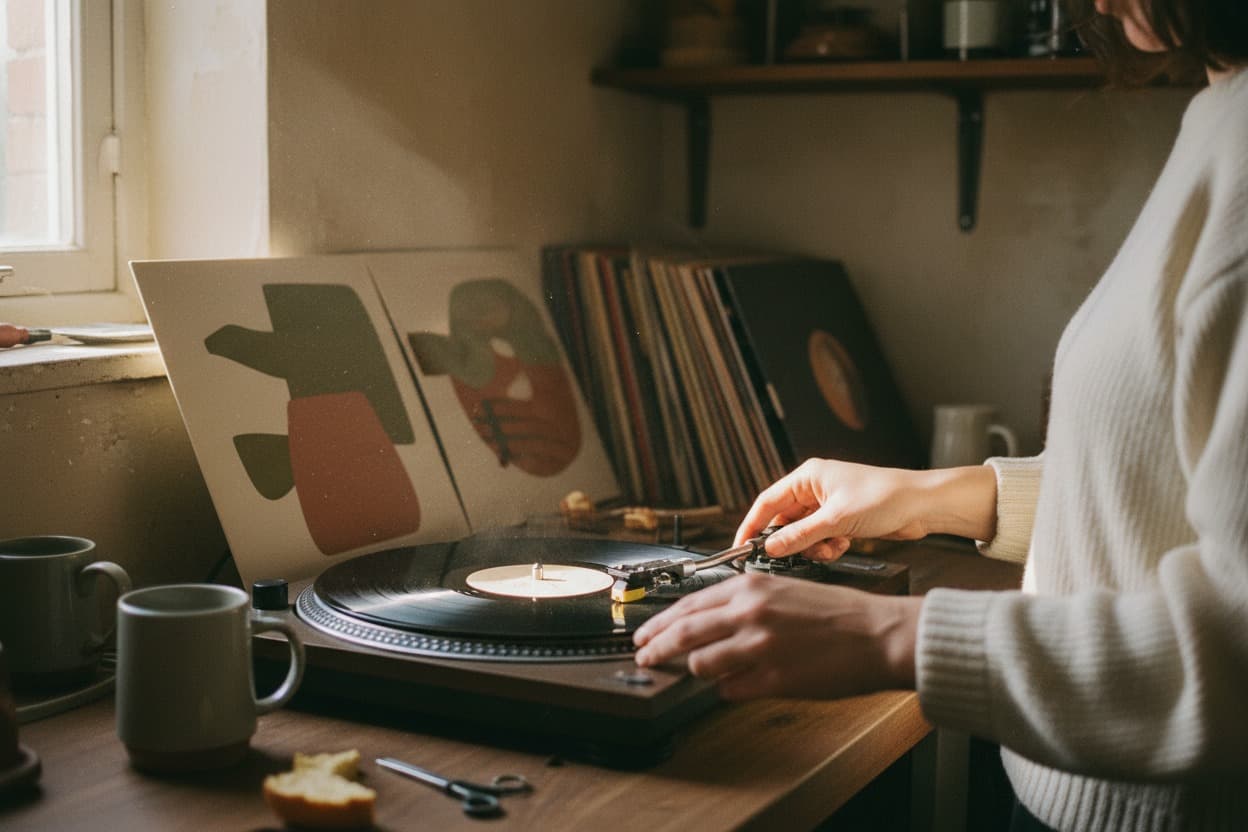
Deliberate listening, one side at a time, with real shelf presence.
Prices checked August 6, 2026 / 2 sources linked / Oded Rochman
What it costs
| Item | Figure | What it covers |
|---|---|---|
| Starter gear | $150–$600 | One-off, everything you need for a first real attempt. |
| Running cost | $20–$100 a month | Materials and consumables at a steady weekly habit. |
| Time per session | 30 min–2 hr | The normal working block, not the maximum. |
| Time to first win | One session | Until you make something you would show someone. |
Every figure here is dated and linked to a live listing under Sources. The same costs across every hobby we track are compared in what hobbies actually cost.
Vinyl is a listening habit rather than a skill, and it is one of the few hobbies on this site with no learning curve at all: your setup works the day it arrives. It suits people who want music to be a deliberate activity, done sitting down, in one room, twenty minutes at a time. The honest catch is that the equipment is the small cost and the records are the large one, and the monthly number climbs quietly.
What it actually costs
The turntable is the easy part. An Audio-Technica AT-LP60X is $179.00 at Sweetwater, with a built-in phono preamp and automatic operation, which removes the two most common ways beginners damage a record. Below that price the risk of a deck that wears your records is real, and it is not a place to save fifty dollars.
The cost people underestimate is speakers. A turntable produces no sound on its own, so a complete first system means adding powered bookshelf speakers or a receiver, and that decision needs to be made before you order, not after.
The records are the actual expense. New releases at Rough Trade currently run $28.99 to $43.99 for a single LP, with double albums and deluxe editions reaching $59.99. Two new records a month puts you between $58 and $88, which is the upper half of the $20 to $100 monthly range in the cost table. The used bin is where the range's lower end lives, and used shopping is a skill that takes a few months to develop.
What to buy first
The AT-LP60X at $179.00 and about three records. The turntable is the easy part of this hobby and the part people overthink: automatic operation and a built-in phono preamp remove the two ways beginners get stuck, which are damaging a stylus by hand and discovering that a turntable will not simply plug into speakers.
Three records rather than ten, because the point of the first month is finding out whether you actually sit and listen. Vinyl's appeal is a specific behaviour, not an object, and a shelf of records bought in week one is the sign of someone buying the identity instead.
Where the money actually goes is records, permanently, at $28.99 to $43.99 for a new release. Budget that per record rather than per year. This is the hobby on the site where the recurring cost most reliably exceeds the equipment, and it does so within a few months.
The deluxe reissues and double LPs at up to $59.99 are where a casual habit quietly becomes expensive. One a month is a different hobby from one a year, and the difference is not a decision most people notice making.
Time to your first win
Same day. Unbox, connect, drop the needle, and the thing you wanted from this hobby is already happening. Nothing else here is that immediate.
The second, slower win is the one that determines whether you keep going: the first time you sit through a full side of an album you would otherwise have skipped through, and it changes your opinion of the record. That usually happens in the first month and it is the actual argument for the format. The interruption every twenty minutes is not a flaw in the medium, it is the mechanism that keeps you paying attention.
Shopping competence develops over roughly six months. Knowing which reissues are mastered well, which used copies are worth their condition grade, and when a $40 new pressing is worse than a used copy of the original is the collector skill, and it is the reason this stays interesting after the novelty passes.
You'll enjoy this if
- You want listening to be the activity rather than a background layer under something else.
- You like physical objects with shelf presence and liner notes you actually read.
- You have a fixed room where a system can live permanently. This is not a portable hobby.
- You enjoy browsing and hunting. Used-bin digging is half the pleasure for most long-term collectors.
- You want something to share in a room with another person, which is why it sits well alongside board games on a slow evening.
Skip it if
- You want the best sound per dollar. Streaming through the same speakers costs less and measures better.
- You move frequently. Records are heavy, fragile in transit, and awkward to store.
- An open-ended monthly spend worries you. There is no natural stopping point and no completion state.
- You listen mostly while doing other things. The format punishes divided attention, which is the point, and it is a real mismatch for some people.
Your first month
- Decide the speaker question before buying the turntable. A $179.00 deck with nothing to plug into is a common and avoidable mistake.
- Buy five records you already know you love before buying anything you are curious about. Familiar albums are what prove the format to you.
- Set a monthly record budget in the first week. Two new releases is $58 to $88 and that is easy to exceed without noticing.
- Visit one used shop before your second new purchase. The price difference between the bin and the new-release wall reframes the whole hobby.
- Buy a carbon fiber brush and use it every play. Dust is the main thing that makes a cheap setup sound cheap.
If you are choosing something to do together rather than alone, the hobbies for couples list covers the alternatives, and music production is the natural step if listening starts turning into making.
Starter gear worth buying
Audio-Technica AT-LP60X turntable
$179.00
Automatic, built-in phono preamp, the standard honest entry point
$28.99 to $43.99
Budget this per record, not per year, or the habit surprises you
up to $59.99
Where a casual habit quietly turns into an expensive one
Gear and class links may earn us a commission. It never changes the price, or which gear we recommend.
Common questions
- Is collecting vinyl expensive?
- The hardware is cheaper than the habit. An Audio-Technica AT-LP60X turntable is $179.00 at Sweetwater and you still need speakers or a receiver. New releases at Rough Trade run $28.99 to $43.99 for a single album, with double albums reaching $59.99. Two records a month is a real recurring cost of roughly $60 to $80.
- Is vinyl a good hobby?
- It fits people who want listening to be an activity rather than a background layer. A side runs about twenty minutes and then you have to get up, which is the entire point and also the entire objection. It is a poor fit if your main goal is sound quality per dollar, because streaming through decent speakers wins that comparison easily.
- How long does it take to get into vinyl?
- There is no learning curve. You will have a working setup and be listening the same day it arrives. The part that develops over months is taste and shopping instinct: knowing which pressings sound good, which reissues are worth it, and how to dig through a used bin efficiently.
- Do I need expensive speakers?
- No, but you need something. A turntable is not a complete system, and this is the cost people forget. Powered bookshelf speakers or a receiver plus passive speakers are the usual route. Budget for speakers at the same time as the turntable rather than discovering the gap after delivery.
- Is vinyl a good hobby for couples?
- It works well because it is a shared activity that does not require both people to do the same thing. One person picks a side, both listen, and the twenty-minute limit builds in natural conversation breaks. It also has a low participation barrier, unlike hobbies where one partner is a beginner and the other is not.
Sources
- Sweetwater, Audio-Technica AT-LP60X belt-drive turntableAugust 1, 2026
- Rough Trade, current new vinyl releases and pricesAugust 1, 2026